-
BACK ORDERED! The essential handbook for Southerners - proudly proclaims the traditions, the culture, and the values that have long distinguished the South from the rest of the nation.
-
Companion book to the book "I'll Take My Stand: The South and the Agrarian Tradition" first published in 1930. In “To Live and Die in Dixie” you will find 27 essays which are designed to supply the weapons needed to take on the intellectually challenged and misinformed purveyors of modern historical imbecility. Intelligence is a weapon of self-defense. If you don’t know your own history then you will be helpless and ignorant before someone who merely claims to know your history! Originally published in the Confederate Veteran magazine from September/October 2010 through November/December 2014.
-
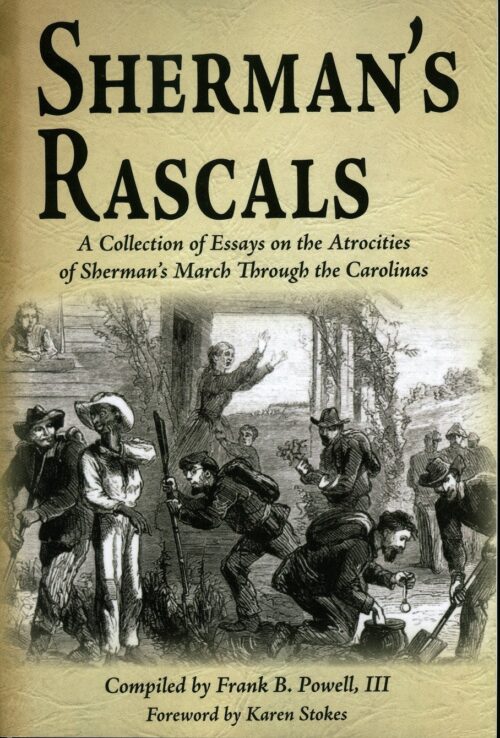
The enormities the people of the South suffered for their experiment in liberty would be unbelievable except for the treasure trove of first-hand accounts they left us. From the long buried archives of Southern history, Mr. Grissom has unearthed letters, diaries, newspaper accounts of the 1860s, and personal recollections of those who survived the brutality of Lincoln's armies as they burned, looted, tortured, molested, and murdered their way across Dixie. Some of these eyewitness accounts have never before been published, while others have not been in print for almost 140 years. 46 photographs from the era illustrate the text of this historical collection of first-hand accounts. The modern reader may be surprised to find that terrorism was not invented by ISIS.
-
One of Savannah, Georgia's closest calls to total disaster happened with the arrival of Wm. T. Sherman and sixty-two thousand Union Troops. This fifty-three-day heart-pounding, nail-biting, hair-raising horror story of her onion-skin-thin bare survival centers on the central question: who REALLY saved Savannah?
-
The ladies who wrote about their experiences wanted future generations to know about their trials and tribulations in the spring of 1865. Their stories have been almost forgotten, but they are printed in these pages for you to read and study, and to pass on to generations yet to come. For if one generation forgets, these stories will be lost for all eternity. Let’s not let this happen!
-
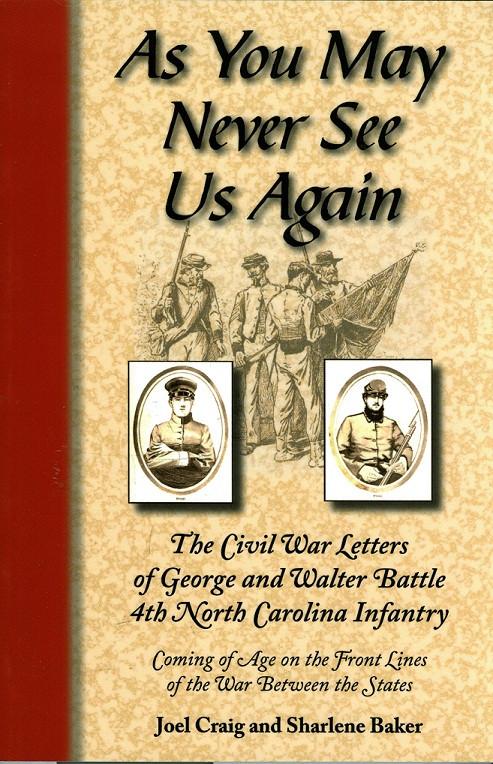
This is a collection of war letters written by teenagers George and Walter Battle during their service in Company F, 4th North Carolina Regiment, CSA. Underage, yet full of vitality and idealism, these boys were not just fighting for their country; they were fighting to protect their family's name. Two young brothers had gone off to war as mere boys. Their experiences quickly hardened and molded them into veterans of the greatest army ever to march on American soil.
-
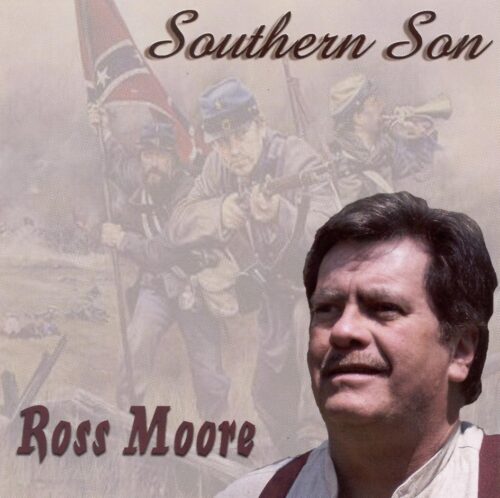
Sale!A collection of 15 songs about the CSA - featuring Ross’ twelve acoustic instruments and stirring vocals. Selections include ‘Young Rebel - The Story of Sam Davis'; ‘Last Day at Gettysburg’; ‘Southern Son’; ‘Aura Lee’ and ‘I Am Their Flag’ narrated by Dr. Michael Bradley.
-
Sale!Ross brings you the treasured acoustic sounds of a musical evening in the Appalachian hills. Includes: Wayfaring Stranger, Shenandoah Falls, Appalachian Round-up, Scarborough Fair and Meghan's Theme.
-
Sale!Another great music collection by Ross. Includes many traditional songs like "Down in the Valley", "Uncle Joe", "The Girl I Left Behind Me" and "Arkansas Traveler" along with many of Ross Moore originals that include "Prettiest Belle at the Ball", "Ghost River", "South Carolina Shuffle" and the beautiful "Sweet Magnolia Waltz" featuring Ross on the Celtic Harp. This CD is Dedicated to: The Gentlemen and Ladies who perpetuate and hold dear the social graces and values of the Old South.
-
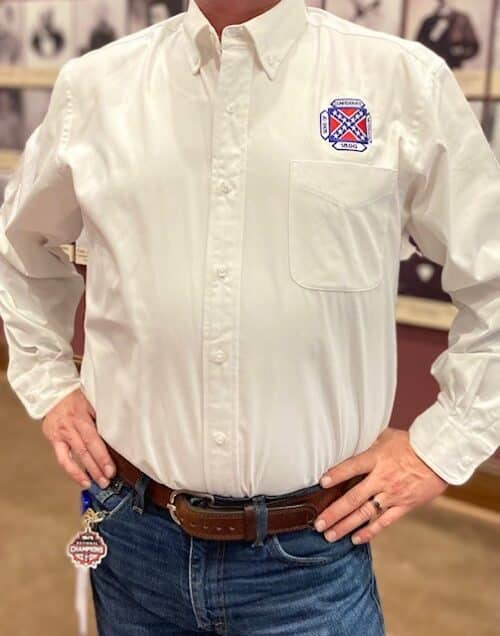
Excellent quality. 55% Cotton/45% Polyester long sleeve oxford shirts with Stain Release. Embroidered above the left pocket. Pearlized color-matching buttons. Extra stitching for strength at seams, armpit & buttons. Flat felled seam finishing. Full back yoke and back pleat. Port Authority brand. Dark Gray, White or Khaki.
-
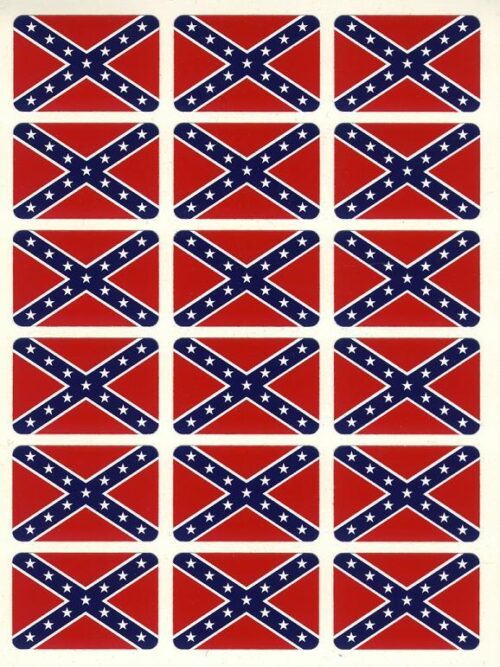
Sheet of 18-Stickers measure 1 1/4" x 2 1/4". Roll of 100-Stickers are 1" square.
-
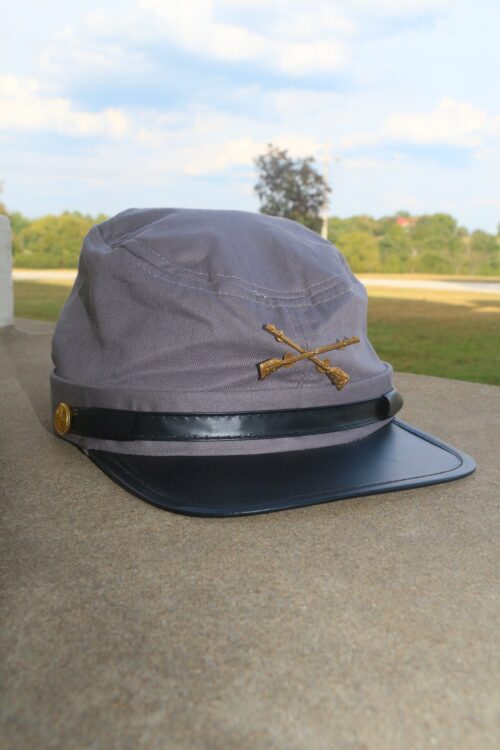
Confederate Enlisted Cotton Kepi. Choose from gray or pastel pink.
-
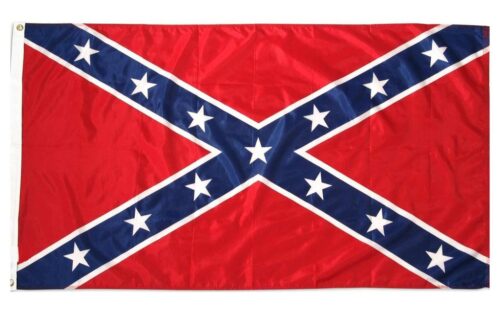
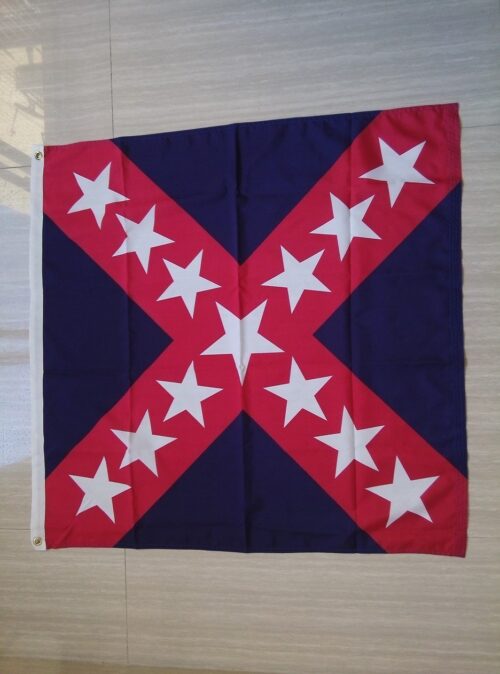
Army of Tennessee Battle Flag also referred to as the "Naval Jack". The SCV's flag design is unique in that it replicates the design of an original flag found in a museum. This is not a novelty flag, but a faithful recreation of an original in dimensions and design.
-
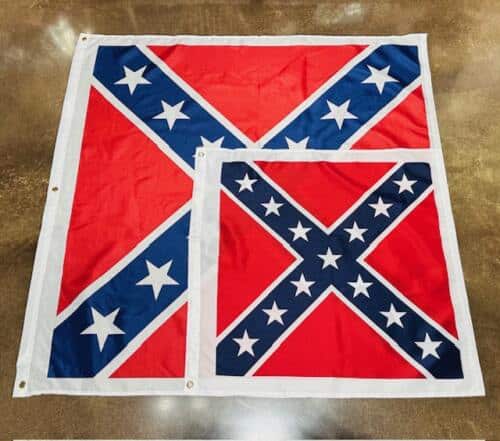
Battle flag of the Army of Northern Virginia. Comes in a 32" X 32" with white border or a 52" X 52" with white border.
-
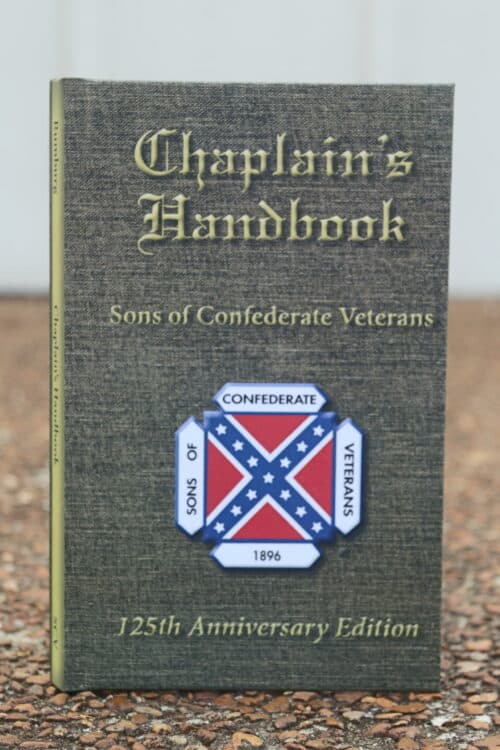
Chaplain's Handbook Enlarged Quasiquicentennial (1896-2021) Edition. Compiled and Edited by Dr. H. Rondel Rumburg ( Past Chaplain-in-Chief; Sons of Confederate Veterans)
-
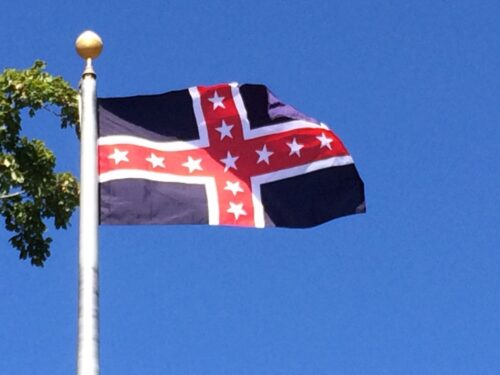
Polyester 3'X5'. General Leonidas Polk was the Episcopalian Bishop of Louisiana, a Confederate Lt. Gen. and Corps Commander in the Army of Tennessee. Killed during the Atlanta Campaign of 1864, the entire Army of Tennessee mourned his death. This distinctive design consisting of white and red Crosses of St. George on a royal blue flag was carried by the regiments in the Polk Corps.
-
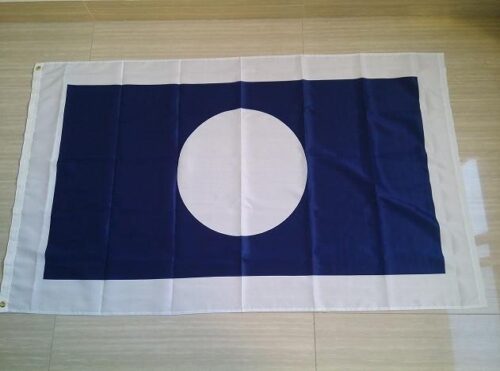
Polyester 3'X5'. General Hardee was a Corps Commander in the Army of Tennessee and this distinctive flag of royal blue with a heavy white border and circled orb was carried by the regiments of his Corps. Patrick Cleburne's men carried this banner into combat and he was killed under it at Franklin.
-
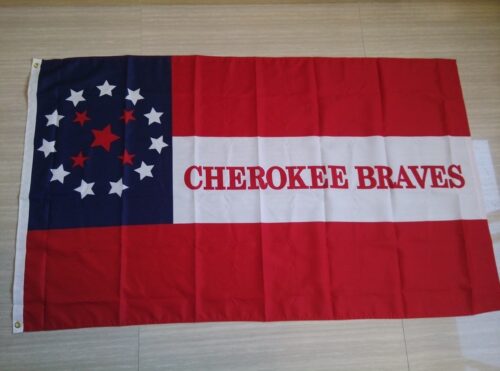
3' x 5' polyester. All 5 of the "Civilized Tribes" of the Native Americans fought for the Confederacy with Cherokee Chief Stand Watie serving as a Confederate general - reportedly the last Confederate general to lay down arms in 1865.
-
This polyester 3'X3' Taylor flag is based upon the flags our ancestors carried into battle in the Army of the Trans-Mississippi.
-
3'x5' polyester 1st National Flag originally adopted on March 4,1861 with 7 stars representing the original Confederate States. This is the "Stars and Bars" flag versus the "Stars and Stripes" flag of the United States.
-
3'x5' polyester 2nd National Flag originally adopted to replace the "Stars and Bars" on March 1, 1863. This was also reverently called the "Stainless Banner" as it is a large white flag with a Confederate Battle Flag in the canton.
-
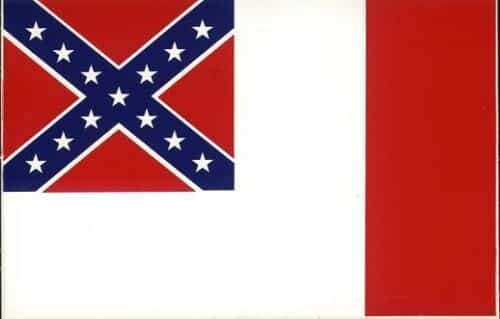
3rd National Flag originally adopted to replace the "Stainless Banner" on March 4,1865. This was also reverently called the "Blood Stained Banner". Standard 3'x 5' polyester with 2 grommets and 4 rows of stitching on the end for a long life of outdoor wear.
-
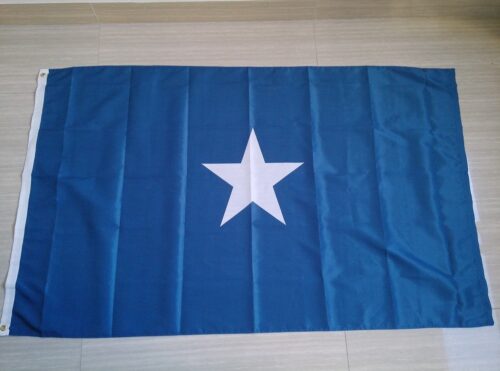
3'x5' polyester Bonnie Blue Flag - the first Confederate Flag, although not officially recognized by the Confederacy.
-
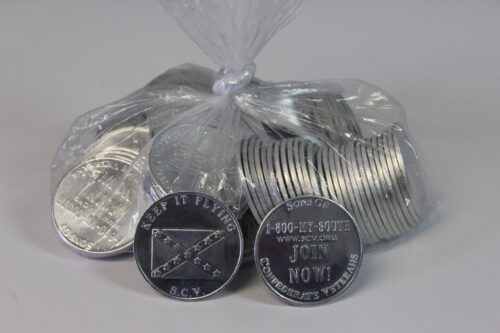
Get these aluminum recruiting coins while you can. The price of aluminum has drastically increased and we may need to switch over to plastic coins in the future. Coins have the flag on one side and our toll free number/web site on the other - great for parades!