-
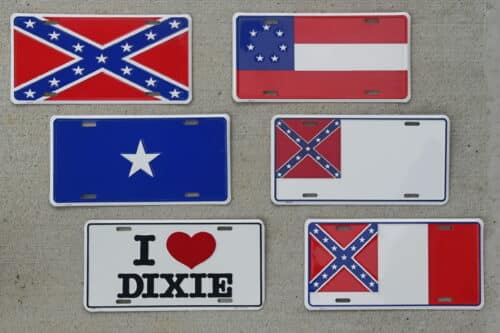
These high quality metal license plates are standard sized and will look good on any vehicle. Note: Occasionally these designs may vary somewhat.
-
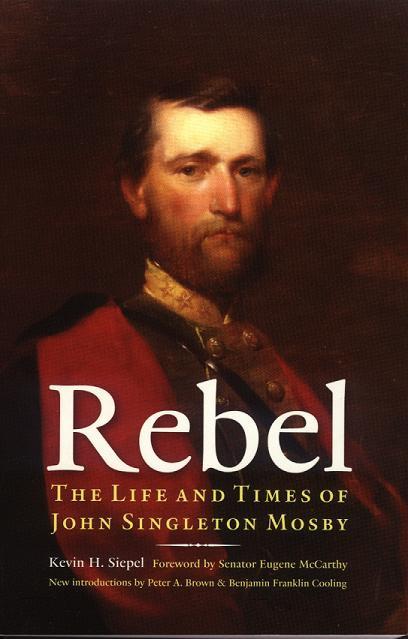
A marvelous account of the life of a great man – the story of the man behind the myth – his childhood, wartime exploits and controversial post-war views which saw him shunned by the same South who had worshipped him during the conflict.
-
The commander of the three-hundred-wagon Union supply train never expected a large ragtag group of Texans and Native Americans to attack during the dark of night. But Brigadier Generals Richard Gano and Stand Watie defeated the unsuspecting Federals in the early morning hours of September 19, 1864, at Cabin Creek in the Cherokee nation. The legendary Watie, the only Native American general on either side, planned details of the raid for months. His preparation paid off--the Confederate troops captured wagons with supplies that would be worth more than $75 million today.
-
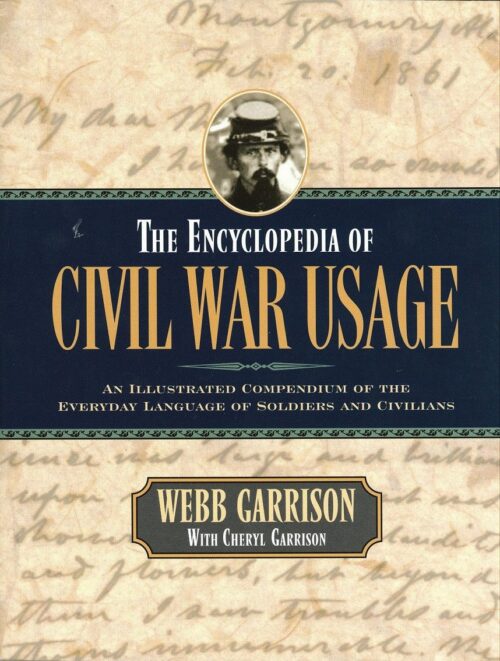
Gumps! Wharf Lice! Ditch Hunters! Though it’s reasonably clear that those terms are insults, few people today have any idea what they mean. Like much of the language used in the 1860’s, these expressions have vanished from everyday speech. This comprehensive volume will delight the historian, the writer, and the reenactor. Now in paperback.
-
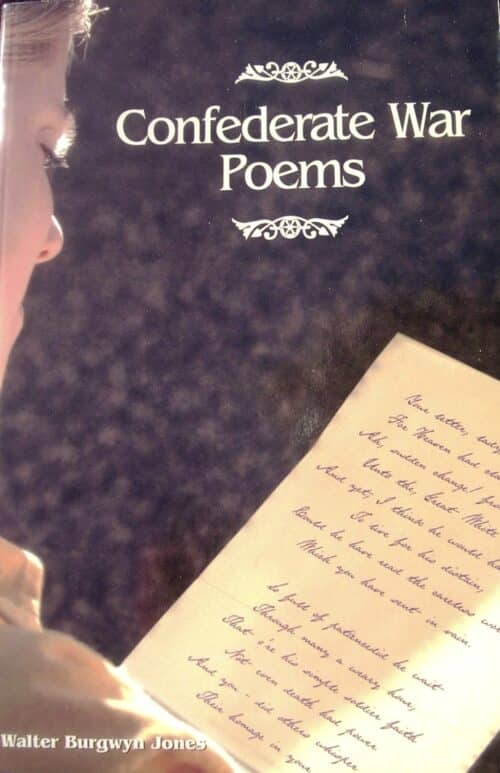
A collection of Confederate War Poems which, in the years long-gone, "spoke to the heart of the South," and which will endure forever in our minds.
-
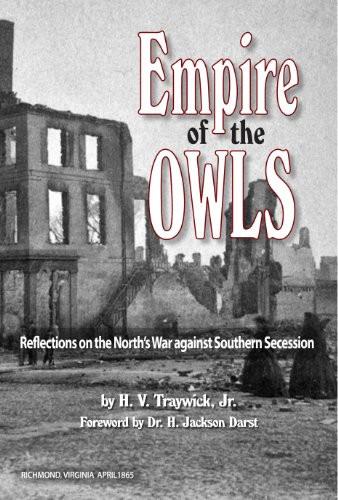
In the middle of the 19th century steam power replaced muscle power as the prime mover of civilization, and the Industrial Revolution roared across the world. A new World-Cycle, the Machine Age, was born. But in the Southern United States men took up arms against the imperatives of the machine, and their Lost Cause marked the end of the Age of Agriculture. By the editing of contemporary diaries, letters, essays, newspaper editorials, memoirs, histories and official records, and the collation of them into a narrative form, this work attempts to paint a contemporaneous portrait of the storm-tossed Confederacy and the revolution that swept it away.
-
Companion book to the book "I'll Take My Stand: The South and the Agrarian Tradition" first published in 1930. In “To Live and Die in Dixie” you will find 27 essays which are designed to supply the weapons needed to take on the intellectually challenged and misinformed purveyors of modern historical imbecility. Intelligence is a weapon of self-defense. If you don’t know your own history then you will be helpless and ignorant before someone who merely claims to know your history! Originally published in the Confederate Veteran magazine from September/October 2010 through November/December 2014.
-
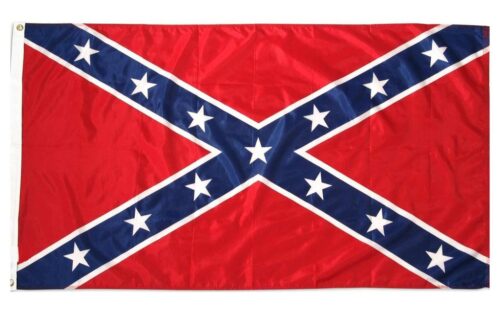
Army of Tennessee Battle Flag also referred to as the "Naval Jack". The SCV's flag design is unique in that it replicates the design of an original flag found in a museum. This is not a novelty flag, but a faithful recreation of an original in dimensions and design.
-
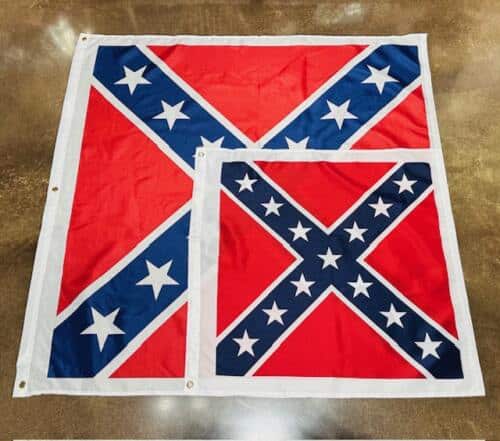
Battle flag of the Army of Northern Virginia. Comes in a 32" X 32" with white border or a 52" X 52" with white border.
-
Polyester 3'X5'. General Hardee was a Corps Commander in the Army of Tennessee and this distinctive flag of royal blue with a heavy white border and circled orb was carried by the regiments of his Corps. Patrick Cleburne's men carried this banner into combat and he was killed under it at Franklin.
-
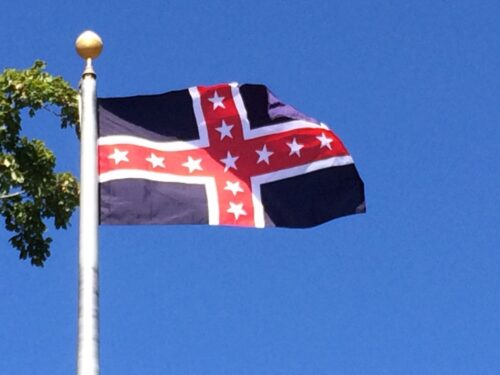
Polyester 3'X5'. General Leonidas Polk was the Episcopalian Bishop of Louisiana, a Confederate Lt. Gen. and Corps Commander in the Army of Tennessee. Killed during the Atlanta Campaign of 1864, the entire Army of Tennessee mourned his death. This distinctive design consisting of white and red Crosses of St. George on a royal blue flag was carried by the regiments in the Polk Corps.
-
3'x5' polyester 1st National Flag originally adopted on March 4,1861 with 7 stars representing the original Confederate States. This is the "Stars and Bars" flag versus the "Stars and Stripes" flag of the United States.